|
|
|
|
|
|
Welcome back to this fortnight's newsletter edition!
|
This week, we wrapped up the series of 14 nutrition workshops, developed and facilitated by the graduating cohort of student dietitians from Curtin University. If you have attended one of these workshops or are interested in learning about nutrition, keep an eye out on our newsletter as we will definitely be bringing back more of these workshops!
|
If you are looking to exercise during the winter months, the age-friendly exercise classes are a flexible and low-commitment option - just attend and pay for the classes individually! We have additional places to fill for the pilates program - so get in quick if you missed out last time. Lastly, the City of Cockburn is organising a community information session to understand your housing and employment rights in Australia.
|
This week, we are continuing to shine the spotlight on heart health. We are reviewing 3 common myths about cooking oils, and the evidence associated with these myths. We will also be sharing a cacao, coconut and olive oil granola, courtesy of the Olive Wellness Institute.
|
Once again, thank you for being a part of a healthier Cockburn!
|
|
|
|
|
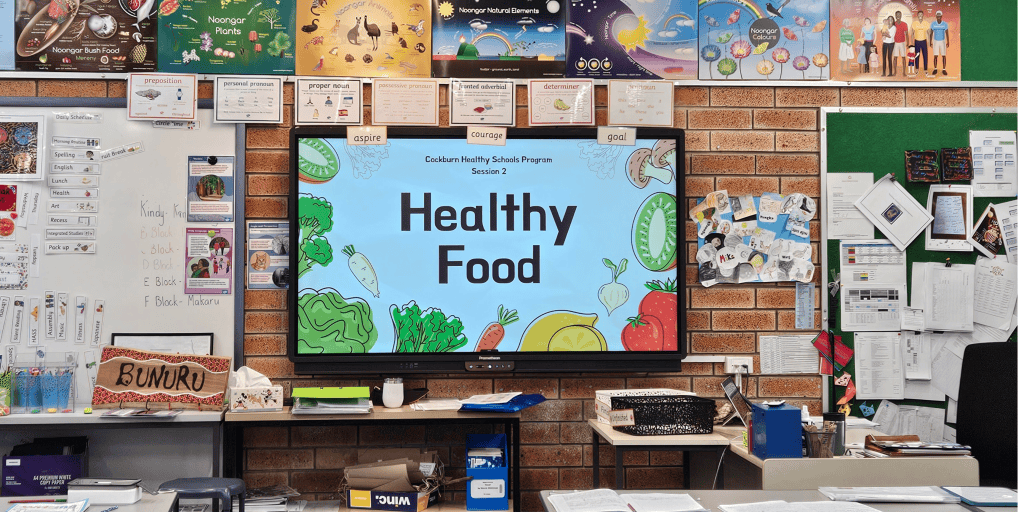
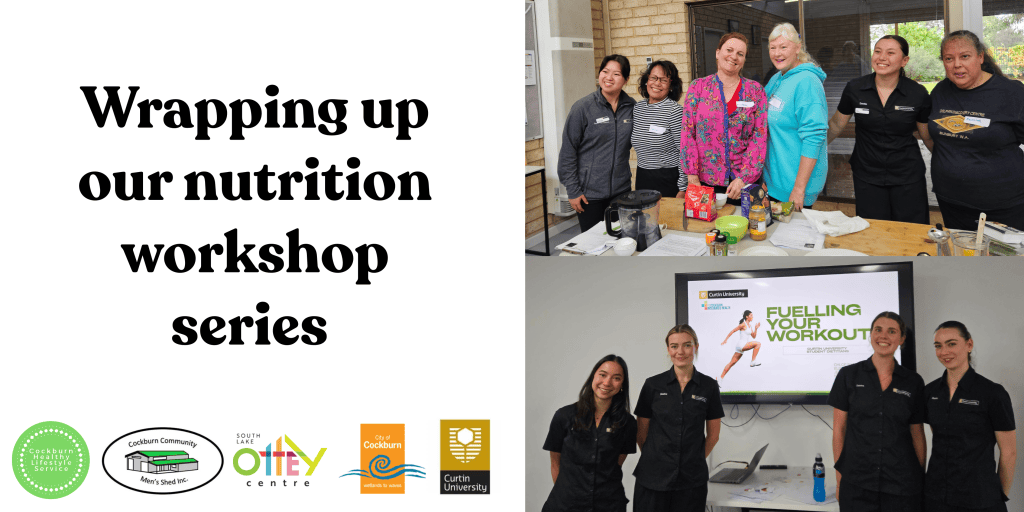
This week, we wrapped up the last workshop of the 3-month nutrition workshop series, delivered throughout the City of Cockburn. Thanks to strong partnerships between CHLS, Cockburn Integrated Health, Curtin University and City of Cockburn, we were able to deliver a total of 14 nutrition workshops covering topics like:
|
- Bone health
- Heart health
- Exercise and musculoskeletal health
- Sleep
- Perimenopause and menopause
- Gut health
- Carbohydrates, energy and diabetes
- Intermittent fasting
- Processed foods
- Fueling your family on a budget
A huge thank you to the final-year student dietitians from Curtin University for sharing practical, evidence-based nutrition information.
|
Attendees gained the latest knowledge and brought home practical, evidence-based tips to improve their nutrition and health. Some participants even got to taste-test yummy recipes, introducing them to new cooking methods and ingredients! Stay tuned as the students will be returning soon.
|
Meanwhile, if you are interested in seeing a dietitian to learn more about healthy eating, you can access free dietetic consults through the Cockburn Healthy Lifestyle Service - send us a message below!
|
|
|
|
|
|
|
|
Upcoming programs and activities
|
|
|
|
|
COMMUNITY FITNESS CLASS FOR OVER 50'S
|
An age-friendly program run by the Cockburn Senior's Centre and supported by the City of Cockburn.
|
You can choose to attend individual sessions, just show up and pay on the day. Choose from a range of classes:
|
- Pilates
- Yoga
- Guided meditation
- Chair yoga
|
Contact the Cockburn Seniors Centre for further details.
|
|
A gentle, full-body workout that builds strength, balance and flexibility, facilitated by Kristy. Suitable for all fitness levels.
|
|
Date: 8th May - 26th June
|
|
Time: 11:00 AM - 12:00 PM
|
|
Venue: Community room, Level 1 Community and Health Building
|
|
|
|
|
|
|
|
A community information session to understand your housing and employment rights in Australia. Open to all and especially helpful for newcomers to Australia.
|
Registrations are required.
|
|
Event hosted by the City of Cockburn.
|
|
|
Date: Wednesday, May 13th
|
|
Venue: City of Cockburn Administration (9 Coleville Crescent, Spearwood)
|
|
For more info, please contact 0894113444 or email multicultural@cockburn.wa.gov.au
|
|
|
|
|
|
Upcoming: Cockburn Healthy Schools Program
The Cockburn Healthy Schools Program (CHSP) is a local initiative aimed at improving nutrition knowledge and healthy lifestyle behaviours among Year 5 and 6 primary school students within the City of Cockburn. The program initiated in 2021, and since its inception, CHSP has worked collaboratively with schools and community partners to deliver tailored, evidence-informed education that supports student wellbeing. Each year, five primary schools within the City of Cockburn are selected to receive free nutrition education through the program.
|
Shuhui, the CHSP coordinator and an Accredited Pracitising Dietitian, will be visiting several primary schools from June to deliver the Healthy Schools Program. Nutrition, dietetics and health promotion students will also be offered the opportunity to assist, providing them with practical learning opportunities.
|
|
If you are a parent, educator or carer interested in bringing the CHSP to your primary school, please encourage your school to reach out to us.
|
|
|
|
|
|
|
|
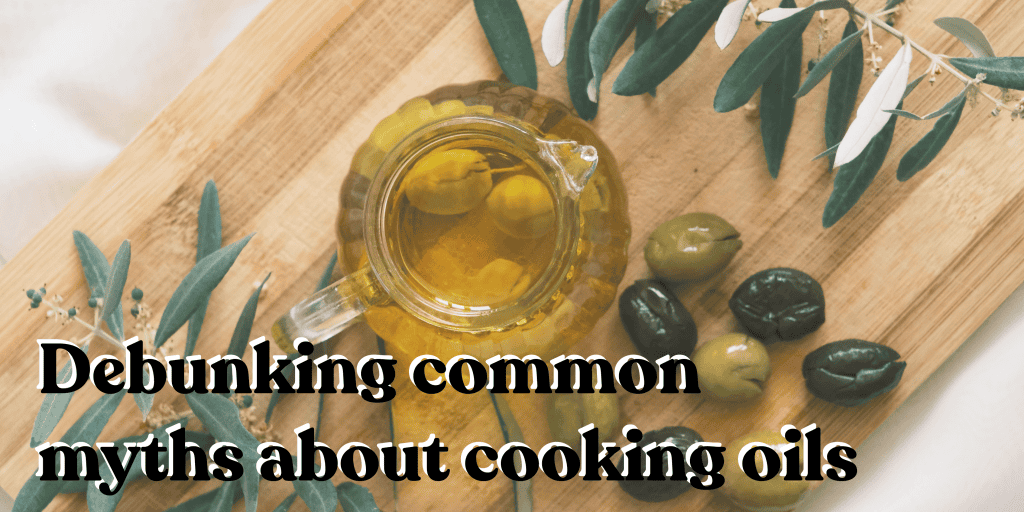
Cooking oils and fats have become one of the most confusing topics in nutrition. With new evidence emerging every week and social media trends turning them into diets and "rules", many people are left confused and wondering what they should cook with.
|
The truth is less dramatic and far more practical. When used in appropriate amounts, most cooking oils can fit into a healthy diet, as the overall dietary pattern matters more.
|
Today we are reviewing 3 common myths about cooking oils, and the evidence associated with these myths.
|
Myth #1: You should avoid fats
For many years, low-fat diets have been promoted for health. We now know that there are various types of fats: saturated, polyunsaturated (PUFA) and monounsaturated (MUFA) fatty acids.
|
Research suggests that consuming nuts, seeds, fish and seafood, and plant-based oils can lower your risk of developing cardiovascular disease. Moreover, fats help support:
|
- hormone production
- brain function
- cell structure and integrity
- the absorption of fat-soluble vitamins (A, D, E, K)
Myth #2: You should not cook with extra virgin olive oil (EVOO)
One of the most common myths is that EVOO releases toxic compounds when heated, and this misconception comes from the fact that EVOO has a lower smoke point than most oils.
|
Research suggests that smoke point is not the most accurate way to predict the stability of an oil. When heated, EVOO was found to be more stable, producing less chemicals from heat degradation. This is because EVOO consists of monounsaturated fatty acids and bioactive compounds that protects the oil from degradation by heat.
|
Myth #3: Seed oils are unhealthy
Claims that seed oils cause chronic inflammation due to their high omega-6 fat content have exploded online over the past few years. This confusion may stem from the fact that many ultra-processed foods contain seed oils - but also refined carbohydrates, salt, excess calories and additives.
|
However, when seed oils are used to replace saturated fats (e.g. tallow, butter, coconut oil), they can effectively lower LDL cholesterol (also known as "bad" cholesterol), reducing our risk of death from chronic diseases like diabetes and cardiovascular disease.
|
Evidence from human studies do not show that seed oils are inflammatory - in fact, they are associated with lower inflammation when used to replace saturated fat.
|
|
|
|
|
|
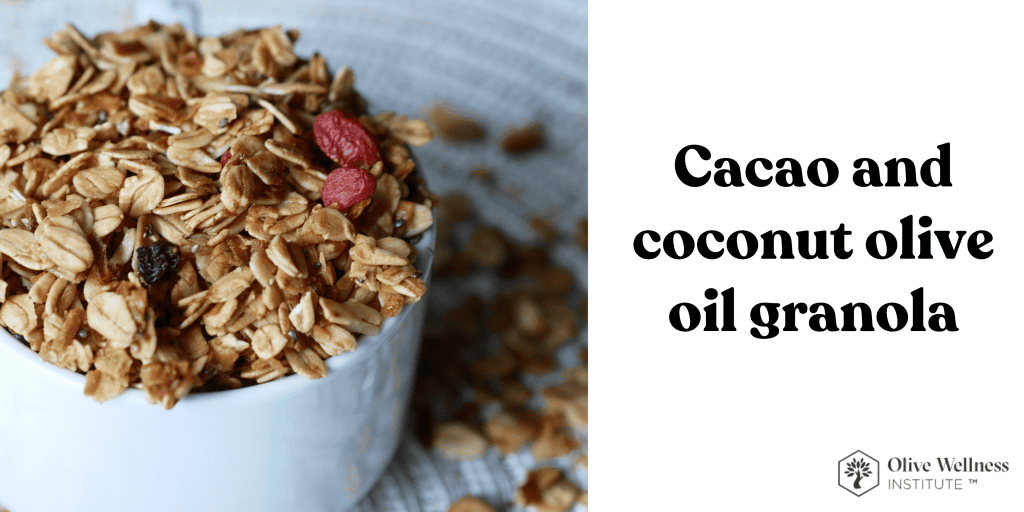
- 2.5 cups rolled oats
- 0.5 cup pumpkin seeds
- 0.5 cup mixed nuts
- 0.5 cup cacao powder
- 1.5 cups coconut flakes
- 2 tbsp flaxseeds
- 0.3 cup extra virgin olive oil
- 2 egg whites
- 2 heaped tbsp maple syrup or honey
- A pinch of salt
|
- Preheat your oven to 180 degrees Celsius.
- Combine the dry ingredients in a large mixing bowl – the oats, pumpkin seeds, nuts, cacao powder, coconut flakes, salt, and flaxseeds.
- In a small mixing bowl, combine the extra virgin olive oil, egg white and honey or maple syrup. Whisk thoroughly to combine.
- Pour the wet ingredients into the bowl with the dry ingredients and stir thoroughly to make sure all dry ingredients are coated evenly.
- Place granola onto a baking tray lined with baking paper or a silicone mat. Press down into a thin layer, ensuring it is evenly spread out.
- Place into the preheated oven for 30 minutes, turning around at the 15-minute mark.
- Allow granola to cook entirely before eating, as this will help it form crunchy chunks
|
|
|
|
Recipe adapted from the Olive Wellness Institute.
|
|
|
|
|
|
|
|
|
|
|